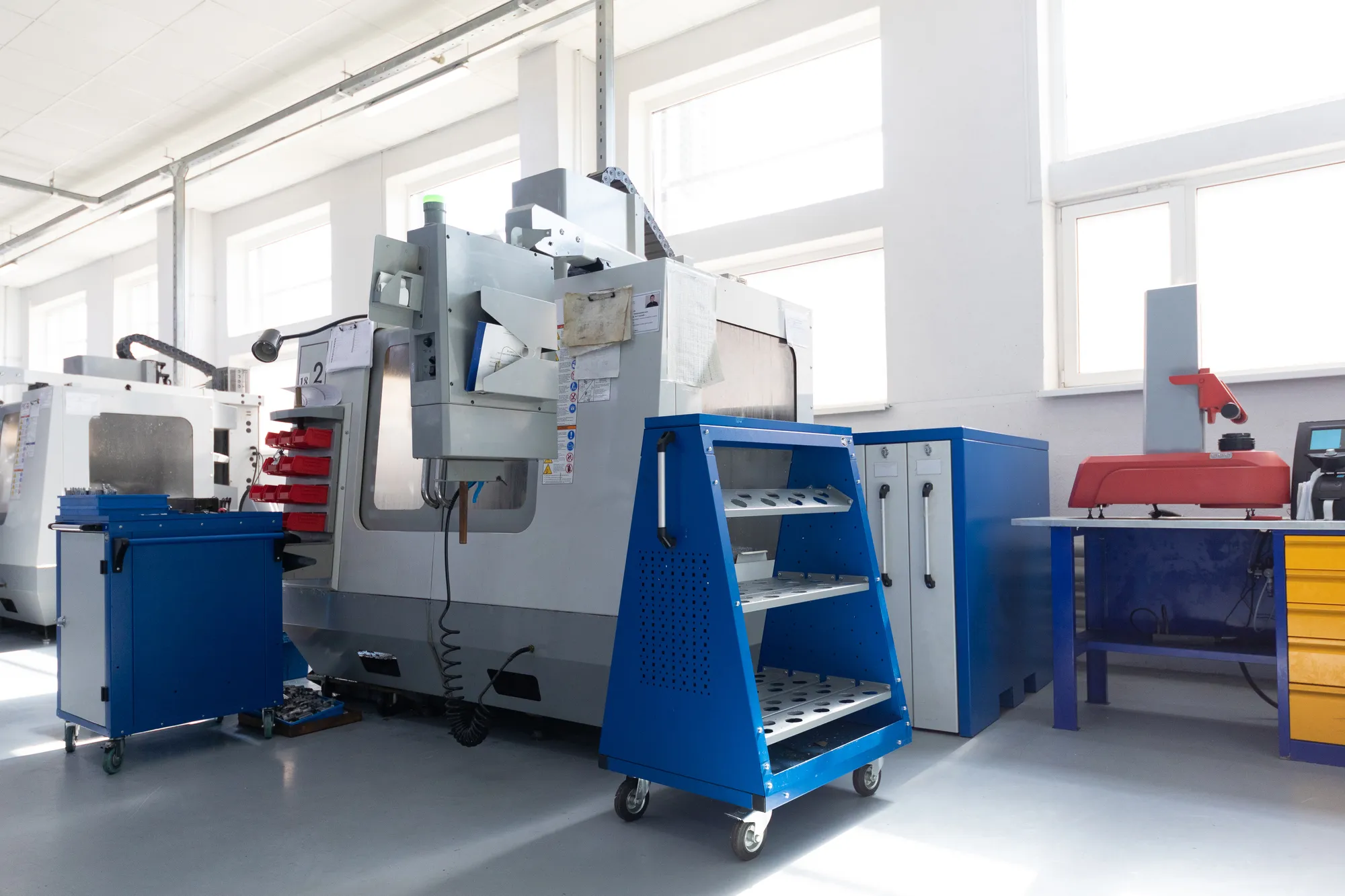
Most machine shop calls start the same way. A new CNC mill or lathe is on order, the delivery date is set, and somebody asks whether the building can actually run it. This guide walks through what an industrial electrician checks before the machine shows up in a San Jose or Bay Area shop: the nameplate, the voltage, the supply circuit, the disconnect, and the permit. Get those right early and startup day is short.
Start with the nameplate and the equipment list
Every quote we write for a shop begins with the machine nameplate. Under NEC Article 670, industrial machinery carries a permanent nameplate that lists the supply voltage, number of phases, frequency, and full-load current, along with the maximum rating of the short-circuit and ground-fault protective device, the full-load current of the largest motor, the short-circuit current rating of the control panel, and the electrical diagram number.
That plate answers most of the early questions. If the machine has not shipped yet, the manufacturer's electrical specification sheet usually carries the same data. Send photos of both, plus the rest of the equipment list: welders, the air compressor, dust collection, and anything you plan to add in the next year or two. Machine shop scope is driven by that list, which is why our machine shop electrical work always starts there.
208V or 480V: the question that sets the budget
Bay Area industrial buildings tend to have one of three services: 208V three-phase, 480V three-phase, or single-phase in older or smaller units. The machine has its own requirement, printed on the nameplate. When the two match, the job is mostly a branch circuit and a disconnect. A mismatch adds equipment and time.
- Machine wants 480V, building has 208V. A step-up transformer near the machine is the usual fix. It takes floor or wall space, and it has to be sized to the machine's full-load current.
- Machine wants three-phase, building is single-phase. The options are a three-phase service from the utility, which means coordination with PG&E or Silicon Valley Power and a longer lead time, or a phase converter sized for the load.
- The building has the right voltage but no spare capacity. A commercial load study shows whether the existing service can carry the new machine, and a three-phase panel upgrade covers the gap when it can't.
This is the single biggest cost driver on a machine install. A matched voltage with spare capacity keeps the install short. A service change adds utility lead time and can stretch the job by weeks.
How the supply circuit gets sized
NEC 670.4(A) sets a specific rule for industrial machine supply conductors. The ampacity has to be at least 125 percent of the full-load current of the largest motor, plus 125 percent of any resistance heating load, plus the full-load current of all other motors and apparatus that can run at the same time.
Machine manufacturers often list a "service required" figure in the install manual. Check whether that number already includes the 125 percent factor before anyone buys wire. We size conductors and overcurrent protection from the nameplate and the code, then compare against the manufacturer's figure. When they disagree, the larger answer wins.
California enforces this through the 2025 California Electrical Code, which took effect January 1, 2026 and is based on the 2023 NEC. The permit inspector will be checking against that edition.
Disconnects within sight of every machine
Each industrial machine needs a disconnecting means, and motors need one located in sight from the motor and the driven machinery. In NEC terms, "in sight from" means visible and no more than 50 feet away. In a crowded shop, a disconnect that meets the distance rule can still be hidden behind a pallet rack, so we place them where the operator can actually see and reach them.
For shops with motors that need speed control, the same planning covers motor control panels, starters, and VFDs. Our three-phase motor and VFD work page lists that scope in detail, and the motor repair vs replacement guide covers what to do when an older motor on the floor starts failing.
Everything else on the shop floor
Supporting loads cause most of the surprises on a shop fit-out.
Welders. Welder circuits get sized to the welder's duty cycle, and the receptacle goes at the workstation where the welding happens. Shops with several welders need a plan for which ones run together.
Air compressors. Compressors pull a large inrush current on start. A dedicated circuit sized for that inrush and the continuous load keeps the compressor from tripping breakers or dimming the lights every time it cycles.
Dust collection. Central systems with multiple machine drops and blast gates need their own power and controls. Where the dust class requires it, wiring has to be explosion-rated, and duct routing gets coordinated with the mechanical trade.
Lighting and safety. High-bay LED lighting with Title 24 controls, emergency lighting and exit signs, e-stops where the equipment calls for them, and machine guarding interlocks. If the shop already has emergency fixtures, our emergency lighting testing guide covers the monthly and annual checks.
Permit, inspection and startup day
Monte Power & Electric pulls the electrical permit and schedules the AHJ rough-in and final inspections. On fit-outs inside a leased space, the electrical scope often runs alongside other trades, and our tenant improvement electrical guide explains how that coordination usually works.
Startup is where the planning pays off. Before the machine runs, we check motor rotation, start up any VFDs, and verify controls integration with the PLC or building automation system where the equipment ties into one. Then comes sign-off, photos, and the warranty paperwork.
The most expensive surprise on a machine install is finding out on delivery day that the building has the wrong voltage.
How long a machine shop fit-out takes
A small shop fit-out of five to ten machines typically runs one to two weeks of electrical scope. A larger manufacturing line with multiple disconnects, dust collection, and process distribution runs three to six weeks, coordinated with the mechanical and equipment trades. A single new CNC drop on an existing panel with spare capacity is much shorter. Any job that needs a utility service change takes longer, because the utility's schedule sets the pace.
Equipment relocations follow the same sequence. Moving a shop from one space to another means confirming the new building's service against every nameplate before the trucks are booked.
What to send before the site walk
Cost depends on the voltage match, available capacity, distance from the panel to each machine, the number of disconnects, and what else is going in at the same time. The quote gets tighter and faster with these in hand:
- Nameplate photos or spec sheets for every machine, welder, and compressor
- A floor plan with the planned machine locations
- Photos of the main panel, its label, and the utility meter
- The machine delivery date
- Whether the space is owned or leased, and who signs off on electrical work
- Any planned dust collection or ventilation changes
Monte Power & Electric is a licensed C-10 contractor, CSLB #1156675, carrying $2M in general liability on every job, with Net 30 and Net 60 terms for commercial accounts. We work across San Jose, Santa Clara, Milpitas, Morgan Hill, and the wider Bay Area. If a machine circuit fails before the new work is scheduled, 24/7 emergency dispatch covers commercial sites too.
Frequently asked questions
What does an industrial electrician need before a CNC machine is delivered?
The machine nameplate or electrical spec sheet, the planned location on the floor, and photos of the main panel. The nameplate lists the voltage, phase, full-load current, and protective device rating, which decide the circuit size, the disconnect, and whether the building service can carry the load.Can a 480V machine run in a building with 208V service?
Yes, with a step-up transformer sized to the machine's full-load current and installed near the machine. It adds cost and takes space, so it should be planned before the machine ships.How far can the disconnect be from the machine?
The NEC requires the motor disconnect to be in sight from the motor and the driven machinery, which means visible and no more than 50 feet away. In practice we place it where the operator can see and reach it without moving equipment.How long does a machine shop electrical fit-out take?
A small shop fit-out of five to ten machines typically runs one to two weeks of electrical scope. A larger manufacturing line with multiple disconnects, dust collection, and process distribution runs three to six weeks, coordinated with the mechanical and equipment trades.Do you pull the permit for machine installs?
Yes. Monte Power & Electric pulls the electrical permit, schedules the AHJ inspections, and delivers the closeout package.
Planning a new machine or a shop move?
Send the equipment list, the floor plan, and the delivery date, and we'll come back with itemized scope and sizing. Call 408-630-0548 or fill out the quote form to get started.
