
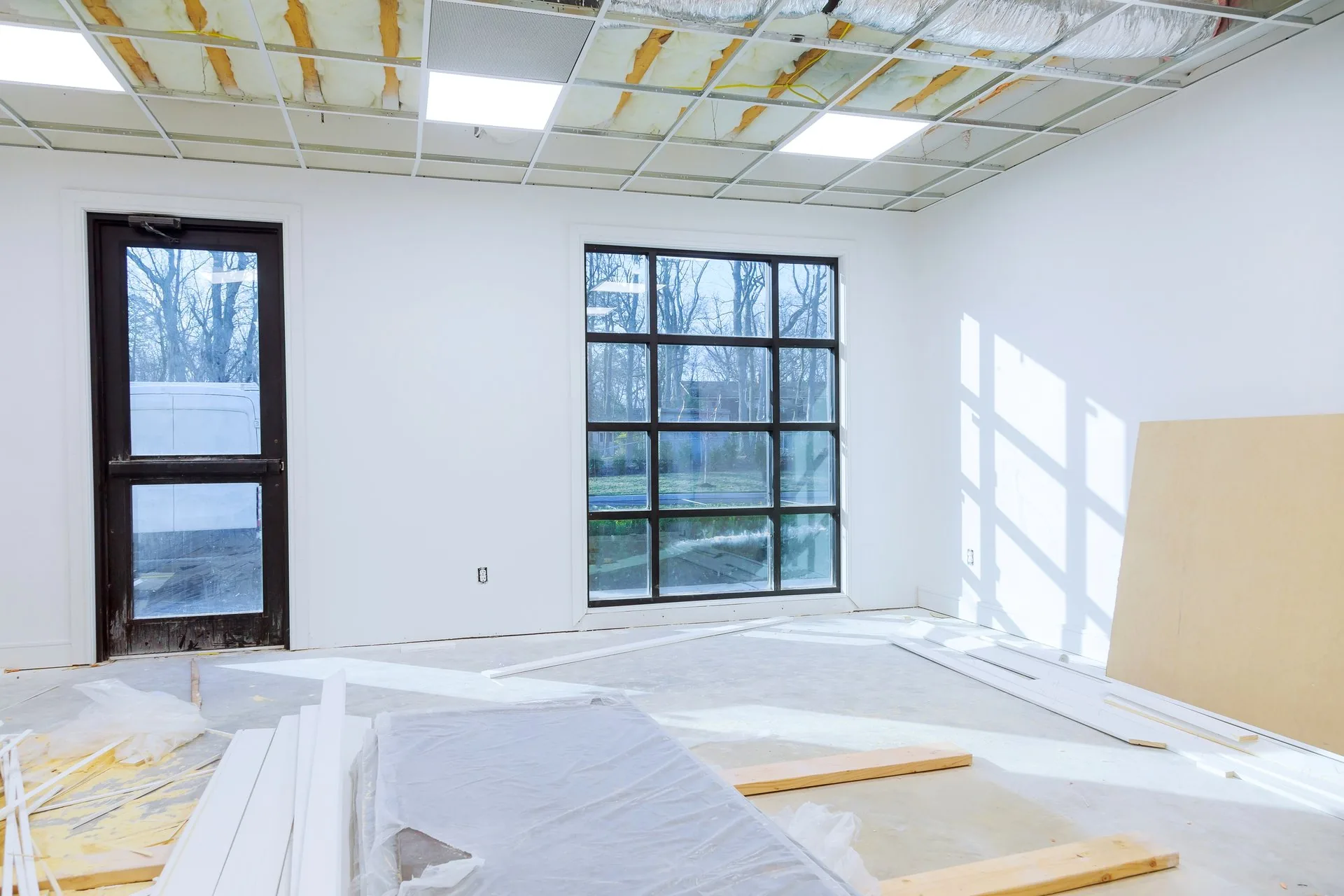
A tenant improvement electrician San Jose lane is rarely the schedule risk on a TI. The risks are Title 24 acceptance testing, equipment circuits the tenant added late, and the AHJ inspection sequence. Here's what GCs should plan for on the electrical scope from rough-in through certificate of occupancy.
What TI electrical actually covers
TI electrical contractor scope splits into four lanes that almost always run concurrently:
- Lighting and controls. LED fixture install, occupancy and daylight controls per Title 24, dimming and zoning, emergency egress lighting.
- Panel modifications. Tenant-side panel mods, dedicated 20A small-appliance circuits, GFCI/AFCI compliance for bath and break-room areas.
- Equipment circuits. HVAC and rooftop disconnects, restaurant kitchen circuits, server room and MDF feeds, lab and instrument power.
- Coordination & closeout. Schedule alignment with mechanical, plumbing, and ceiling trades. Title 24 NRCC at permit, NRCA at closeout.
Schedule on a typical office TI
Most office TI projects run a four-to-six-week build, with the electrical lane on a parallel schedule:
- Week 1: Permit and rough-in start. Permit submitted with NRCC-LTI lighting compliance. Conduit and box rough-in begins as soon as framing is up.
- Week 2-3: Rough-in completes. All conduit, boxes, and wire pulls done before drywall close-up. AHJ rough-in inspection scheduled.
- Week 3-4: Trim and devices. Fixtures, devices, controls installed and addressed. Time clock and demand response programmed if scope requires.
- Week 5: Acceptance testing. CALCTP-certified technician runs the NRCA-LTI acceptance tests. Sensor coverage, daylight setpoints, dimming curves verified.
- Week 6: Final inspection & closeout. Final AHJ inspection. Closeout package delivered to GC and tenant.
The schedule risk isn't the install. It's the late-add equipment circuits and the acceptance testing date.
Title 24 acceptance testing
Every TI in California needs Title 24 Part 6 lighting compliance. Two specific deliverables for the GC's COO package:
- NRCC-LTI at permit. The lighting compliance form submitted with the permit application. Documents fixture schedule, controls, and lighting power density math.
- NRCA-LTI at closeout. Acceptance testing performed by a CALCTP, NLCAA, or CLCP certified technician. Tests sensor coverage, daylight harvesting setpoints, multi-level dimming, and demand response readiness.
The acceptance testing date is the schedule risk. If the tech can't run the tests because lighting isn't fully addressed or the controls aren't programmed, the COO date slips. We schedule acceptance testing inside our crew rather than dependent on a third party. Full breakdown on the tenant improvement page.
Late-add equipment circuits
The most common schedule problem on a commercial buildout electrical scope isn't the design. It's the tenant adding equipment after rough-in is closed.
Common late-adds:
- A new espresso machine in a coffee shop TI that needs a dedicated 240V/30A circuit at a counter location with no existing run.
- A walk-in cooler in a restaurant kitchen with a different amperage than what was on the original equipment list.
- A medical office adding an autoclave or sterilizer that needs 240V single-phase or 208V three-phase at the equipment location.
- An office TI tenant adding a server room after permit, with cooling load and dedicated circuits not in the original drawing.
The fix: lock the equipment list with the tenant before drywall close-up. Late-adds before close-up cost less than late-adds after.
Retail TI wiring specifics
Retail TI wiring carries a few specific requirements that office TI doesn't:
- Display lighting circuits. Track and accent lighting on dimming controls. Often a separate zone from general illumination.
- POS power and data. Dedicated circuits for POS workstations with conditioned power and surge protection.
- Storefront signage. Exterior sign lighting on photocell and time clock controls. Coordinated with the city sign permit.
- Storefront security. Power for security camera systems, door access, and alarm panels. Low-voltage coordination with the security trade.
Permit pull: GC master vs. separate
Two paths for the electrical permit:
- Under the GC's master permit. Faster on small TIs where the GC is pulling everything. We file as a sub. Less paperwork at the front end.
- Separate electrical permit. We pull our own permit and run the AHJ inspection sequence directly. Useful on larger projects where the electrical scope has its own milestones.
Either works. The GC's preference and the AHJ's process for the specific city dictate the choice. San Jose, Santa Clara, Mountain View, and Milpitas all accept either route.
Closeout package for the COO
The TI electrical closeout package the GC needs for COO:
- Permit closeout signed by the AHJ.
- NRCC-LTI and NRCA-LTI acceptance forms.
- As-built lighting and panel drawings.
- Panel directory.
- Insulation resistance test results (if scope warrants).
- Manufacturer warranties on file.
- Photos of major install milestones for the property file.
Frequently asked questions
What does TI electrical scope cover?
TI electrical contractor scope on most Bay Area commercial buildouts covers lighting and Title 24 controls, panel modifications, dedicated equipment circuits (HVAC, kitchen, lab), low-voltage rough-in coordination, and final acceptance testing.How long does the electrical lane add to a TI?
Most office tenant improvement electrician San Jose projects run two to four weeks of electrical scope. Restaurant and lab TIs run four to eight weeks driven by equipment circuits and Title 24 acceptance testing.Do you partner with GCs on Net 30 / Net 60 terms?
Yes. GC electrical partner Bay Area relationships typically run Net 30 with progress billing on larger TI scopes. Closeout invoice held for final acceptance.How does Title 24 acceptance testing work on a TI?
NRCC-LTI submitted at permit. NRCA-LTI acceptance testing runs at closeout, performed by a CALCTP-certified technician. The signed forms are part of the GC's certificate of occupancy package.Who pulls the permit on a TI?
Either way. We can pull a separate electrical permit or work under the GC's master permit, whichever is faster for the schedule. We handle AHJ coordination and inspections regardless.
What to do next
If you're a GC with TI projects in design or scoping, the right time to bring the electrical lane in is at design review, not at permit. Walk us through the floor plan, the equipment list, and the GC's schedule, and we'll come back with a coordinated build plan.
Get an estimate with terms agreed up front.
