
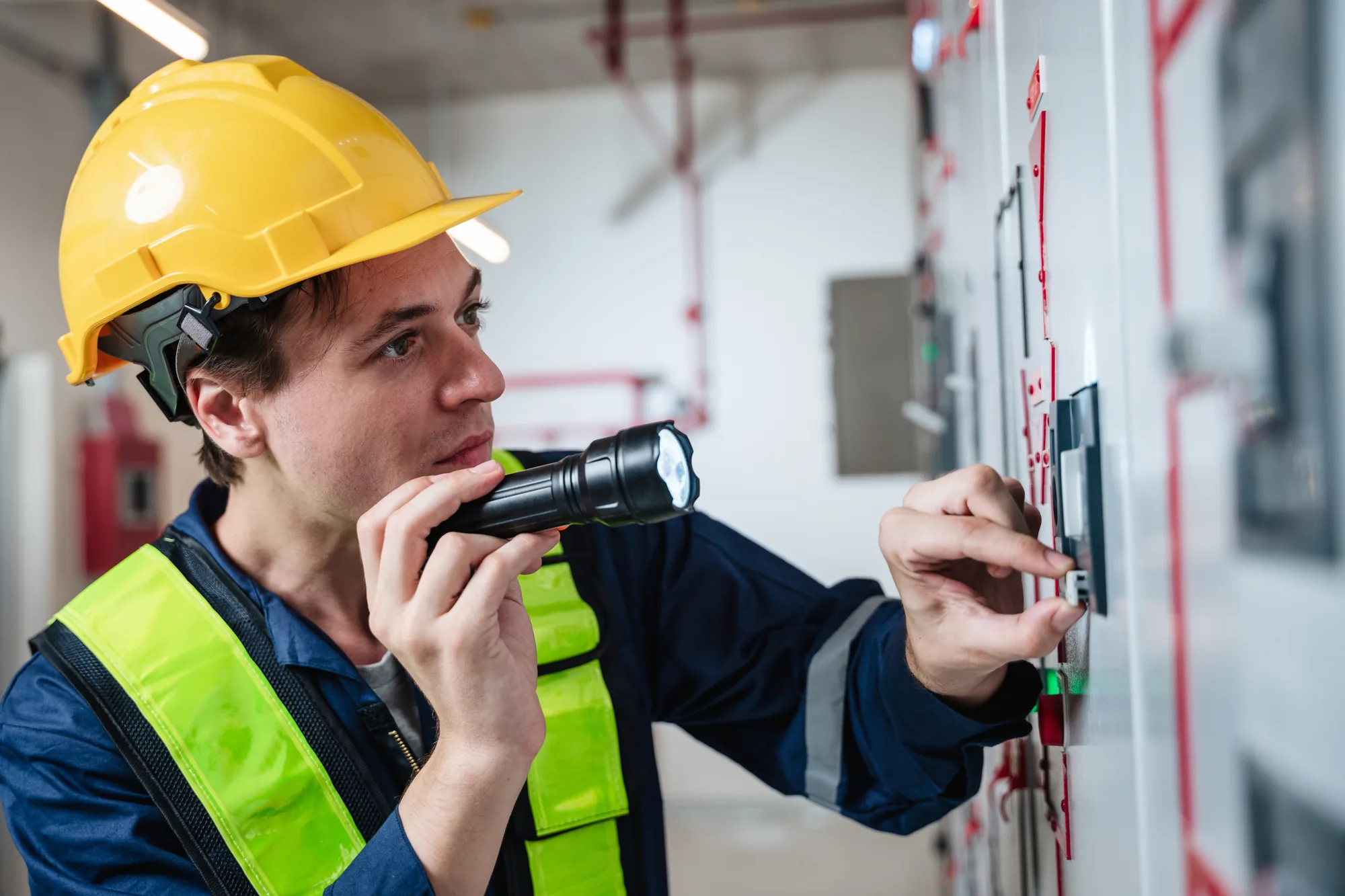
Emergency lighting is the part of a commercial building nobody thinks about until a fire inspector asks for the log, or until a carrier's loss-control visit turns into a correction notice. The fixtures are cheap, the batteries are cheap, and the test is boring. What is expensive is finding out during a real outage that half the heads in a stairwell went dark at minute twelve. This is what a San Jose building owner or property manager actually owes on emergency lighting and exit signs, and what the testing really catches.
Which buildings this applies to
If your building requires two or more exits, the California Building Code expects an emergency electrical system to light the egress path automatically when normal power fails. That covers interior exit access stairways and ramps, interior and exterior exit stairways, exit passageways, vestibules, the areas on the level of discharge used for exit discharge, and the exterior landings outside exit doors.
Two numbers set the target. Egress illumination has to be not less than 1 footcandle at the walking surface. On exit access stairways, exit stairways and their landings, it has to be not less than 10 footcandles at the walking surface while the stairway is in use. Exit signs and the egress lighting both have to stay powered for not less than 90 minutes.
In practice this catches almost every commercial property we work on in San Jose: office suites, multi-tenant retail, light industrial, machine shops, labs, and the common areas of larger multi-family buildings. A single-tenant storefront with one exit often sits outside it. If you are not sure which side your building falls on, the exit count and the occupancy classification on the certificate of occupancy will tell you.
The two tests, and what each one proves
NFPA 101, Section 7.9.3, is where the schedule comes from. It is the document fire inspectors and insurance carriers ask for records against, and it names two separate functional tests.
The 30-day test, minimum 30 seconds. Kill normal power to the fixture and confirm the heads come on. This catches a dead lamp, a disconnected head, a fixture wired to a switched circuit by mistake, and a charger that has stopped charging. It takes about a minute per fixture once you know where they all are.
The annual test, minimum 90 minutes. Same thing, held for the full egress duration. This is the one that matters and the one most buildings skip, because it requires somebody to come back an hour and a half later and confirm the lights are still producing usable light.
A sealed battery loses capacity gradually. A fixture can pass the 30-second test every month for three years after it stopped being able to finish the 90.
That gap is the whole reason the annual test exists. Monthly testing alone gives a building a clean log and a stairwell that goes dark partway through an evacuation.
Self-testing fixtures: useful, not a free pass
Self-testing and self-diagnostic emergency lighting runs its own 30-day functional test and its own annual 90-minute test, and it flags a failure with a status indicator on the fixture. On a building with sixty heads across four floors, that is a real labor saving and worth the upgrade cost on the next replacement cycle.
What it does not do is remove the human step. Someone still has to look at the status indicators at 30-day intervals, and the owner still has to keep written records. An indicator blinking red in a back stairwell nobody walks is the same as no test at all.
What actually fails
Running these tests across Bay Area commercial properties, the failures cluster:
- Batteries at end of life. The single most common finding, and the reason the annual test exists. Unit equipment batteries are consumables on a multi-year cycle.
- Dead or misaimed heads. Lamps burn out and nobody notices, because the fixture looks fine with the pilot light on. Heads also get knocked out of aim during tenant work and end up lighting a ceiling.
- Exit sign LEDs and stems. Older signs fail partially, leaving a legible sign in daylight that is unreadable with the room lights off.
- Fixtures on the wrong circuit. Emergency lighting has to sit on an unswitched circuit. Tenant improvement work that reroutes a lighting branch onto a switch leg is a recurring find, and it passes visual inspection completely.
- Transfer equipment. In buildings on a generator or central inverter, the failure moves upstream to the transfer switch and the emergency branch. That equipment has its own testing schedule, covered in our post on what a commercial standby generator permit actually requires.
The written record
The owner keeps the records. Written records of the visual inspections and the functional tests have to be available on site for the authority having jurisdiction, and the annual Title 19 fire inspection is usually where they get asked for. That inspection walks exit signs, emergency lighting, extinguisher tags, fire door operation, sprinkler head clearance, and electrical panel access on every visit.
What a usable record contains: the date, who performed the test, which fixtures were tested, the result for each, and what was corrected. A photo of a log sheet in a binder is enough. A note in somebody's phone is not, once the inspector is standing in the lobby.
Portfolio owners and property managers usually fold this into a standing maintenance visit rather than tracking it per building. That is most of the value of a property management electrical account: the fixture count is already mapped, the log is already on file, and the annual 90-minute test is already on the calendar. The wider maintenance picture is in our guide to what Bay Area property managers should have on an electrical schedule.
When testing turns into replacement
At a certain age, testing a building's emergency lighting costs more than replacing it. Two situations push that decision:
The first is a fixture population where more than a third fails the annual test in the same year. Batteries installed together fail together, and you end up paying for a test visit plus a return trip for parts, repeatedly.
The second is a tenant improvement. When a suite gets reconfigured, the egress path moves, and the existing heads end up lighting the wrong spaces. Replacing fixtures during the build rather than after final inspection avoids a correction on the punch list. We cover the broader sequencing in tenant improvement electrical scope.
Monte Power & Electric is a licensed C-10 contractor, CSLB #1156675, carrying $2M in general liability on every job, working across San Jose, Santa Clara, Mountain View, Milpitas, Los Gatos, Morgan Hill, and the wider Bay Area including San Francisco, Oakland, and Palo Alto. If an inspection notice has a deadline on it and the lighting is already failing, 24/7 emergency dispatch runs with priority routing on commercial accounts.
Pricing depends on fixture count, how many floors and stairwells the crew has to cover, whether the building needs after-hours access, and how much of the population needs batteries or heads at the same visit. For a number against your building, call 408-630-0548 or fill out the quote form at contact.
Frequently asked questions
How often does emergency lighting have to be tested?
NFPA 101 Section 7.9.3 calls for a functional test at 30-day intervals lasting at least 30 seconds, plus an annual functional test lasting at least 90 minutes. The 30-second test proves the fixture switches over. The 90-minute test proves the battery still carries the full egress duration the building code requires.Do exit signs need the same testing as emergency lights?
Yes, where the exit sign carries its own battery or is fed from the emergency system. The California Building Code requires exit sign illumination to stay powered for not less than 90 minutes during a power failure, so the sign is tested on the same schedule as the egress lighting around it.Do self-testing emergency light fixtures remove the monthly test?
They remove the manual button-holding, not the obligation. Self-testing and self-diagnostic equipment runs the 30-day and annual tests on its own, but someone still has to look at the status indicators at 30-day intervals and the owner still has to keep written records for the authority having jurisdiction.How much light does an egress path actually need?
The California Building Code sets means of egress illumination at not less than 1 footcandle at the walking surface. Exit access stairways, exit stairways and their landings need not less than 10 footcandles at the walking surface while the stairway is in use.Who keeps the emergency lighting test records?
The building owner. Written records of the visual inspections and functional tests have to be available on site for the authority having jurisdiction, and the annual Title 19 fire inspection is usually where they get asked for. Property managers on a maintenance account typically have the contractor file the record after each visit.What does a failed 90-minute test usually mean?
Most often a battery at the end of its service life. Sealed batteries in unit equipment lose capacity gradually, so a fixture can pass a 30-second test for years after it has stopped being able to run the full 90 minutes. Head failures, a dead charging circuit, and fixtures wired to a switched circuit rather than an unswitched one are the other common causes.
Need the annual test on the calendar?
Send the building address and a rough fixture count and we'll scope the walk, run the 90-minute test, and leave you with a log the inspector will accept. Get an estimate or call the dispatcher to talk through the building.
