
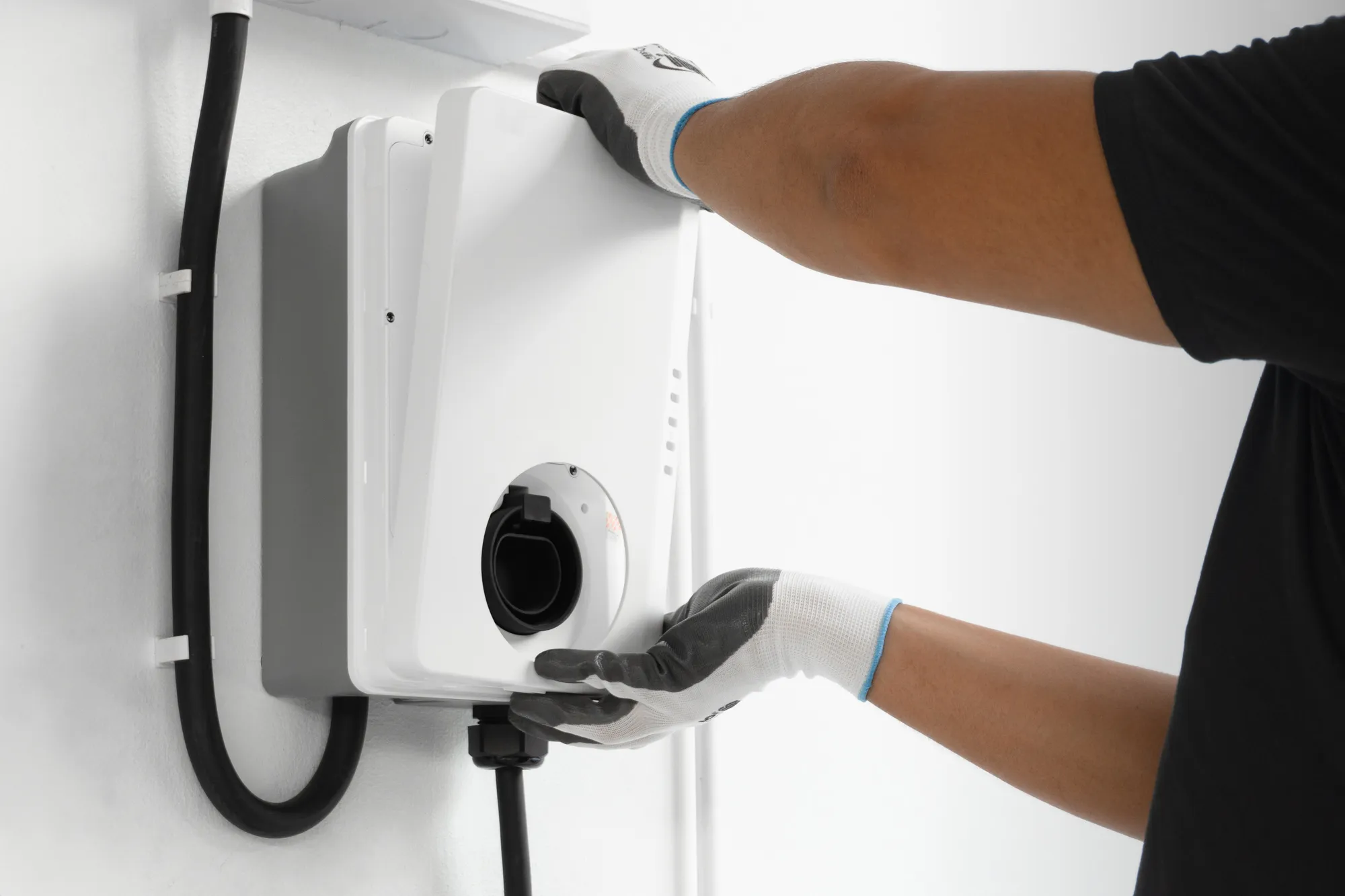
Office lots, apartment garages and fleet yards across San Jose are adding EV chargers, and those projects tend to hit the same three questions early. Does the building have the electrical capacity? What does the code require? How long will the utility take? A typical home charger goes in within a day. Ten chargers on a commercial service is a small construction project, with a permit, an accessible parking layout and sometimes utility work. This guide takes the planning steps in the order they usually come up.
Four kinds of commercial charging sites
Each site type asks something different of the electrical system, so the first planning step is being clear about which one you have.
- Office and workplace lots. Employees park for most of the day. Slower Level 2 charging spread across many ports usually covers the need.
- Apartment and multi-tenant garages. Residents charge overnight, and the owner needs a way to bill each driver for what they use.
- Fleet depots. Vehicles come back on a schedule and have to be ready by a set time. The charging window and the vehicle count drive the design.
- Dealership delivery bays. Cars need a top-up before handover, so a few higher-power ports matter more than many slow ones.
Start with electrical capacity
The electrical code treats EV chargers as continuous loads. Under Article 625, each charger's branch circuit is sized at 125% of its rated continuous load, so a 40A charger needs a 50A circuit. Multiply that by ten or twenty ports and an older service runs out of room quickly.
Two tools change the math. The first is measuring what the building really uses. Section 220.87 lets twelve months of utility demand data, or a 30-day recording, set the existing load in place of a nameplate calculation. On a building that has been running for years, that number is frequently lower than the paperwork suggests. Our guide to commercial load studies walks through the method.
The second is an EV energy management system. Section 625.42 lets the calculation use the limit set by a listed energy management system in place of each charger's full rating. The chargers share a fixed block of power and slow down when many cars plug in at once. Drivers still leave with a charge, and the service never sees more than the set limit. For a lot where cars sit for eight hours, that tradeoff is easy to accept.
When the numbers still do not fit, the charger project becomes a service upgrade project. We quote the charger work and the upgrade together, so the owner sees one scope. The commercial panel upgrade checklist covers that path step by step.
Capacity is the first answer to get. It decides how many ports go in, whether load sharing is needed, and whether the utility has to be involved at all.
Level 2 or DC fast charging
Level 2 chargers run on 208V or 240V circuits and suit any electric car that stays parked for a few hours. That covers most workplace and apartment charging. DC fast chargers deliver far more power for quick turnarounds, such as fleet vehicles running back-to-back shifts. They typically need a 480V three-phase supply and can draw 50 kW or more per unit, which can push a site toward new switchgear or a new transformer. If your building already has three-phase service, that changes the options. For most lots, a larger number of Level 2 ports with load management meets the need with much less electrical work.
What the 2025 codes require
California's 2025 building codes took effect January 1, 2026. That includes CALGreen, the state green building standard, which sets minimum numbers of EV capable spaces and installed charging stations for new nonresidential parking.
Existing buildings can be pulled in too. Under CALGreen Section 5.106.5.4, EV requirements apply to additions and alterations in a parking facility when the work increases the power supply to an electrical panel there, adds a new solar array over existing parking, or otherwise triggers the alteration rules with a panel upgrade in the scope. The requirement is based on the parking spaces being added or altered.
Bay Area cities can adopt stricter local versions, and some have. Menlo Park amended its CALGreen EV tables for the 2025 code, and San Jose has had an EV reach code for new construction since 2019. The plan reviewer applies whatever the city adopted, so confirm the local version before the layout is final.
Chargers at commercial sites also fall under the accessibility rules in Chapter 11B of the California Building Code. Section 11B-228.3 sets how many accessible charging spaces a site needs, including van accessible spaces, based on the total number of charging stations. When chargers are added to a site that already has some, the count includes the new and existing stations together. Accessible spaces need wider stalls, access aisles and an accessible route, which affects where conduit and pedestals go. That belongs in the layout before any trenching.
Permits and the state review clock
State law requires every California city and county to offer an expedited permit process for EV charging stations, with review limited to health and safety. AB 970, passed in 2021, added deadlines:
- 1 to 25 chargers at one site: 5 business days for the city to deem the application complete, then 20 business days to approve or deny it.
- 26 or more chargers: 10 business days for completeness and 40 business days for approval.
If the city takes no action within those windows, the law can treat the application as complete or approved, with exceptions for documented health and safety findings. An application that follows the city's EV checklist moves fastest. We pull the EV permit and schedule the inspection as part of the job.
Utility work and fleet programs
If the site needs a larger service or a new transformer, the utility sets the pace. In San Jose that is usually PG&E. Buildings in Santa Clara are served by Silicon Valley Power, the city's own utility, which runs its own process; our Santa Clara service page covers how that differs.
Fleet operators with medium or heavy duty vehicles should look at PG&E's EV Fleet program. It funds or builds the make-ready infrastructure up to the charger, and PG&E states the program is authorized to enroll sites through December 31, 2026. Participants commit to at least two eligible vehicles and a 10-year operating term, and PG&E puts the process at about 9 to 13 months from application. Program participants can also enroll in PG&E's Business EV rate, which replaces demand charges with a monthly subscription.
The federal tax credit has ended
Budgets drafted before mid-2026 may count on a federal credit that no longer applies to new installs. The One Big Beautiful Bill Act moved the end date of the Section 30C charging equipment credit to June 30, 2026, and the IRS says equipment placed in service after that date does not qualify. PG&E and the Bay Area Air District have offered charging programs at various times, so check what is open before you set the budget.
Billing tenants and drivers
Apartment and multi-tenant owners should decide early how drivers will pay, because the choice changes the wiring. Networked chargers bill each driver through an app and need a cellular or Wi-Fi connection at every unit. Sub-metering lets the owner charge usage back to each tenant and adds meters to the layout. We install load-sharing networks, tenant billing systems and sub-metering for chargeback. The property management page covers how charger work fits with recurring service across a portfolio.
What drives the cost
Commercial charger projects are priced site by site. The main cost drivers are the number of ports and their power level, whether the existing service has room or needs an upgrade, the distance from the electrical room to the parking, and whether the conduit runs on a wall, overhead in a garage or through trenched asphalt. Accessible stall work, concrete pads and pedestals, network and billing hardware, and any utility work add to the total. For a site-specific number, call 408-630-0548 or fill out the quote form. Our EV charger installation page shows the steps, from the headroom check to the final inspection, and homeowners can start with our home EV charger guide.
Frequently asked questions
How many EV chargers can my commercial building support?
It depends on the spare capacity of the electrical service and whether the chargers use load management. Each charger counts at 125% of its rated load. Twelve months of utility demand data or a 30-day recording shows the real headroom, and an EV energy management system lets more ports share it.Do commercial EV chargers in San Jose need a permit?
Yes. State law requires an expedited review limited to health and safety. For 1 to 25 chargers at one site, the city has 5 business days to deem the application complete and 20 business days to approve it. Larger sites get 10 and 40 business days.Is the federal EV charger tax credit still available?
No, not for new installs. The Section 30C credit ended for equipment placed in service after June 30, 2026. Check current PG&E and Bay Area Air District programs before budgeting around an incentive.Should my business install Level 2 or DC fast chargers?
Level 2 suits vehicles parked for several hours, which covers most workplace and apartment lots. DC fast chargers suit quick turnarounds such as busy fleets. They typically need a 480V three-phase supply and much more capacity from the service.How much does commercial EV charger installation cost in San Jose?
It depends on the number and power of the ports, whether the service needs an upgrade, the length and route of the conduit run, accessible parking work, network and billing hardware, and any utility work. For a quote, call 408-630-0548 or fill out the quote form on our contact page.
Planning chargers for a lot, garage or fleet yard?
Need a commercial electrician for EV charger installation in San Jose or elsewhere in the Bay Area? Send us the number of ports you want, the service size and a rough site plan. We will check the panel headroom, map the run path, and send an itemized quote within one business day. Get an estimate or call the dispatcher to talk it through.
