
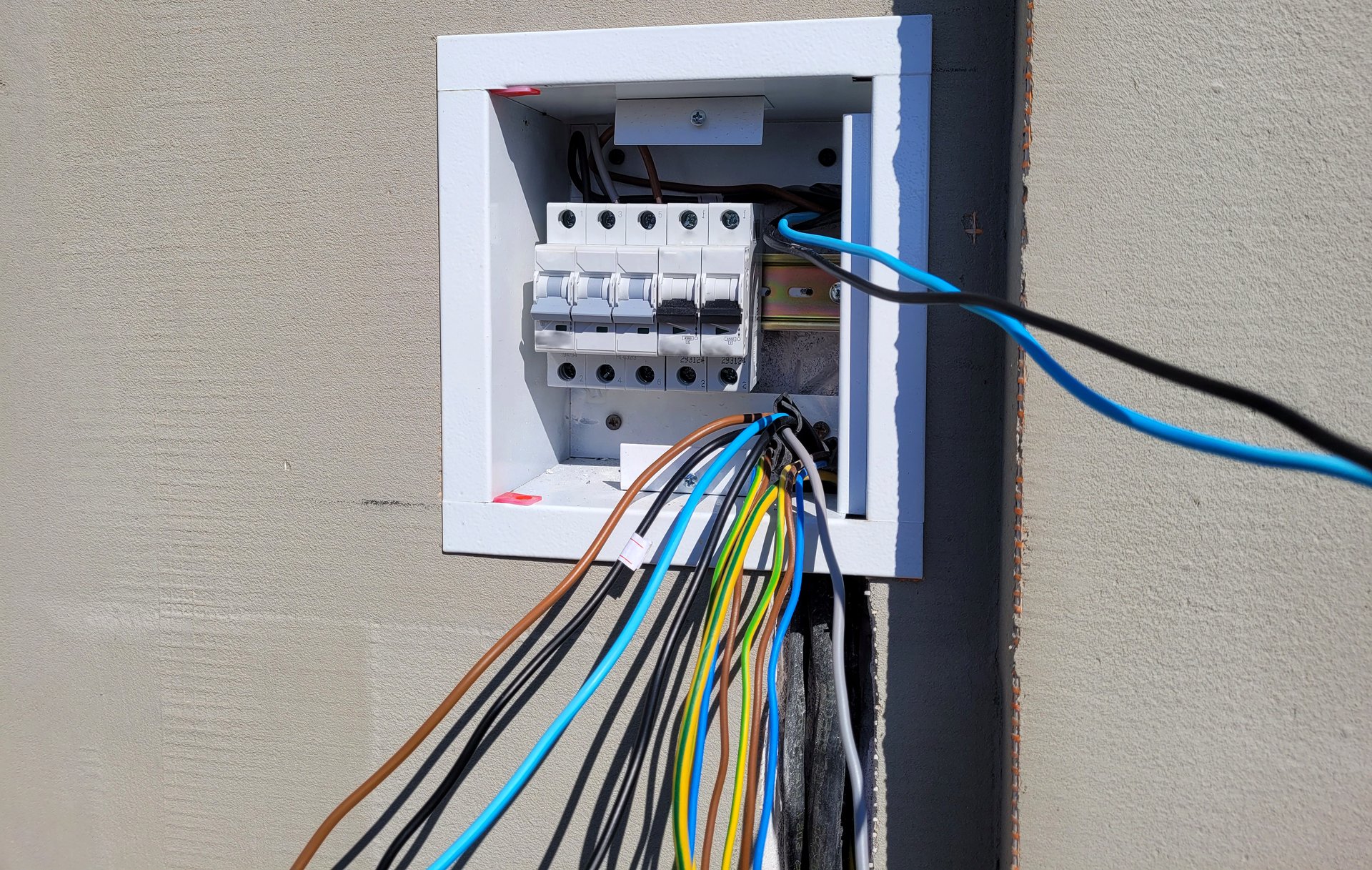
A panel upgrade San Jose homeowners actually need usually starts with a real load: an EV on order, a heat pump quote, a battery install blocked at permit. Here's how the load calc works, what a 200 amp panel cost actually breaks down to, and when a 100A or 125A main can stay where it is.
When to upgrade an electrical panel
Most San Jose homes built before 2000 still run a 100A or 125A main. That was fine for 1990s loads. It is not fine for a 2026 home with an EV charger, an induction range, a heat pump, and a Powerwall on the wishlist. Knowing when to upgrade an electrical panel comes down to three triggers.
The load trigger. Each new high-draw appliance pushes the load calc. EV chargers pull 32 to 48 amps continuous. Induction ranges pull 40. Heat pumps add another 30 to 50. Stack two or three onto a 100A main and the math runs out before the breakers do.
The brand trigger. Federal Pacific Stab-Lok, Zinsco, and Pushmatic panels carry documented failure-to-trip behavior under fault. Insurance carriers are non-renewing homes that still have them. The swap is not load-driven; it is safety-driven.
The headroom trigger. Solar installs are governed by NEC 705's 120 percent rule. A 100A panel rarely has the busbar headroom to backfeed a meaningful solar array. A 200A main usually does.
The load calc, in plain English
The load calculation isn't a guess. NEC 220 lays out a specific method: lighting and general loads at 3VA per square foot, fixed appliances at nameplate, large appliances with demand factors, plus the largest motor at 125 percent. The result is the calculated demand in volt-amps. Divide by 240 and you have the demand in amps.
For a typical 1,800 sq ft single-family San Jose home with central AC, an electric range, dishwasher, washer/dryer, and an EV charger, the calculated demand frequently lands in the 130 to 160 amp range. That fits inside a 200A main with comfortable headroom for the next addition. It does not fit inside a 100A main without trimming.
A 200A main isn't always necessary. But once you start adding EV, heat pump, or battery, the math almost always points there.
What 200A actually buys you
Three things, in order of how often they matter.
- Headroom for the next project. The biggest reason to upgrade today is so the next project (EV charger, battery, heat pump) doesn't trigger another upgrade. Sizing once is cheaper than sizing twice.
- More breaker positions. A 200A main typically has 30 to 40 breaker spaces. That covers dedicated kitchen circuits, bath GFCI/AFCI, EV, heat pump, and a battery feeder without double-tapping or piggyback breakers.
- Modern protection. AFCI on bedroom circuits, GFCI on bath and exterior, surge protection at the main. None of this comes standard on a 1985 panel.
200 amp panel cost in San Jose
An electrical panel replacement runs to a different price depending on three drivers. The list below is what we typically itemize on the quote so homeowners can phase if budget requires.
- Panel and breakers. The gear itself plus the breakers needed for existing and new circuits. Square D QO and Eaton CH are the two we install most.
- Service entrance. Whether the meter base, mast, weatherhead, and service drop can stay or need rebuilding. About a third of older homes need at least the meter base swapped.
- PG&E coordination. The disconnect, meter swap, and reconnect are all handled with PG&E directly. The customer doesn't fill out a form.
A typical residential 200 amp panel cost in San Jose depends on the service-entrance condition and conduit run. Add a service-entrance rebuild and the line items move up. Pair it with rewiring or an EV install and the combined ticket is lower than running them separately. The full breakdown sits on the main panel upgrade page.
The upgrade process, end to end
The on-site walk runs 30 to 45 minutes. We confirm the existing main amperage, check the service entrance, run the load calc against your appliance list, and look at where the panel will land. The quote comes back the next business day with itemized scope.
Permit pulled through the San Jose Building Department or the relevant AHJ for your address. PG&E coordination scheduled for the same day. Most cutovers run a four to six hour power-down window. Final inspection scheduled by us, sign-off and warranty paperwork delivered.
Frequently asked questions
How do I know if I need a panel upgrade?
If you are adding an EV charger, induction range, heat pump, or battery, the load calculation usually pushes a 100A or 125A panel past its limit. Federal Pacific, Zinsco, or Pushmatic gear is also a trigger regardless of the new load. The on-site walk and load calc tells you where the math actually lands.How much does a 200A panel upgrade cost in San Jose?
A 200 amp panel cost in San Jose depends on conduit length, meter location, service-entrance condition, and whether the existing entrance can stay or needs rebuilding.How long does a 200A panel upgrade take?
One day for a standard 200A residential main with the existing service entrance reused. The cutover power-down window runs four to six hours. A 200A with full re-entry runs one to two days.Do I need to upgrade if I am adding solar?
Often yes. NEC 705 sets the maximum solar backfeed at 120 percent of the busbar rating. A 100A panel rarely has the headroom for a meaningful solar install. Most San Jose solar installs pencil cleanest off a 200A main.Can the existing service drop stay?
On most 200A residential upgrades, yes. We confirm the meter base, mast, and overhead drop on the on-site walk. If the entrance is at end of life, we quote the rebuild line by line so the customer can choose.
What to do next
If you have an EV charger or heat pump on order, the right time to upgrade is before the install date, not after the quote returns blocked. The on-site walk is no charge.
Walk us through the appliance list and the timeline, and get an estimate for the panel and any pairing work in the same quote.
